
I am thrilled to unveil some profound insights about Jesus’ Sermon on the Mount, particularly His words about storing up treasures. This sermon is rich with transformative truths that had a significant impact on me when I first encountered them. My hope is that this article brings you spiritual clarity and fills you with joy through the Holy Spirit, as what I’m about to reveal is not only liberating—but also profoundly uplifting.
Jesus reached a segment in his sermon where he began teaching about money and possessions, he began by the following words:
Matthew 6:19-20 NLT
“Don’t store up treasures here on earth, where moths eat them and rust destroys them, and where thieves break in and steal. Store your treasures in heaven, where moths and rust cannot destroy, and thieves do not break in and steal.”
Jesus gives a contrast of what we should and shouldn’t do. First off, let us look into what we shouldn’t do:
1. Don’t Store Up Treasures on Earth
By referring to money and possessions as treasures of the earth, Jesus highlights their fleeting nature. These treasures are vulnerable to decay and theft, teaching us that their value is only temporary.
Examples of Earthly Treasures:
- Clothes: Easily destroyed by moths, clothing serves as a metaphor for impermanence.
- Possessions: Thieves target valuable items for their monetary worth, underscoring their vulnerability.
- Precious Metals: Metals, including money and timepieces, are prone to rust and deterioration over time.
These physical valuables should not be amassed as they are subject to decay and loss.
2. Store Up Your Treasures in Heaven
In contrast, Jesus commands us to store our treasures in heaven. Although He does not specify what these treasures are, the implication is clear: they are of eternal significance.
Examples of Heavenly Treasures:
- Believing And Trusting In Christ: Whatever we put our belief and trust in determines the course of our lives both now and into eternity. Our belief in Jesus Christ the Son of God guarantees us eternal life.
John 3:16 NIV
“For God so loved the world that he gave his one and only Son, that whoever believes in him shall not perish but have eternal life.”
- Life: God has given us all the will to choose. Choosing to God’s will over our will is tantamount to storing up treasures in heaven which leads to life. Jesus chose to do the will of the Father (Luke 22:42) and was raised up from the dead to life eternal.
Investing our lives in God’s path secures them beyond the reach of decay, theft, or disappointment.
3. Where Is Your Treasure?
Jesus further explains in Matthew 6:21: “Wherever your treasure is, there the desires of your heart will also be.”
If your life and believes are centered in God, then your heart’s desires will also align with Him. Isaiah echoed this sentiment when he wrote:
Isaiah 26:8 NLT
“Lord, we show our trust in you by obeying your laws; our heart’s desire is to glorify your name.“
We must choose to trust in God rather than material wealth. Psalm 60:8 highlights this choice: “Some trust in chariots and some in horses, but we trust in the name of the Lord our God.”
3. God vs. Money
Jesus concludes this teaching on money and possessions with the following words:
Matthew 6:24 NIV
“No one can serve two masters. Either you will hate the one and love the other, or you will be devoted to the one and despise the other. You cannot serve both God and money.”
This distinction challenges us to choose between serving God or money.
When you serve money, your desire is to accumulate earthly possessions like clothes and other physical valuables. However, when you serve God, your desire is to do the will of God which is good, perfect and pleasing (Romans 12:2).
Serving money leads to greed, while serving God leads to a fulfiling life. Jesus emphasizes this contrast in John 10:10 (NIV):
“The thief’s purpose is to steal and kill and destroy. My purpose is to give them a rich and satisfying life.”
David also contrasts serving and trusting in God or money. He mentions that those who trust in their wealth grow more and more bold in their wickedness (Psalm 52:7). However, those who trust in God are likened to an olive tree, thriving in the house of the Lord (Psalm 52:8). The olive tree is symbolic of the abundance and peace, that is only found within the presence of God in whom we serve.
4. Treasures In Heaven
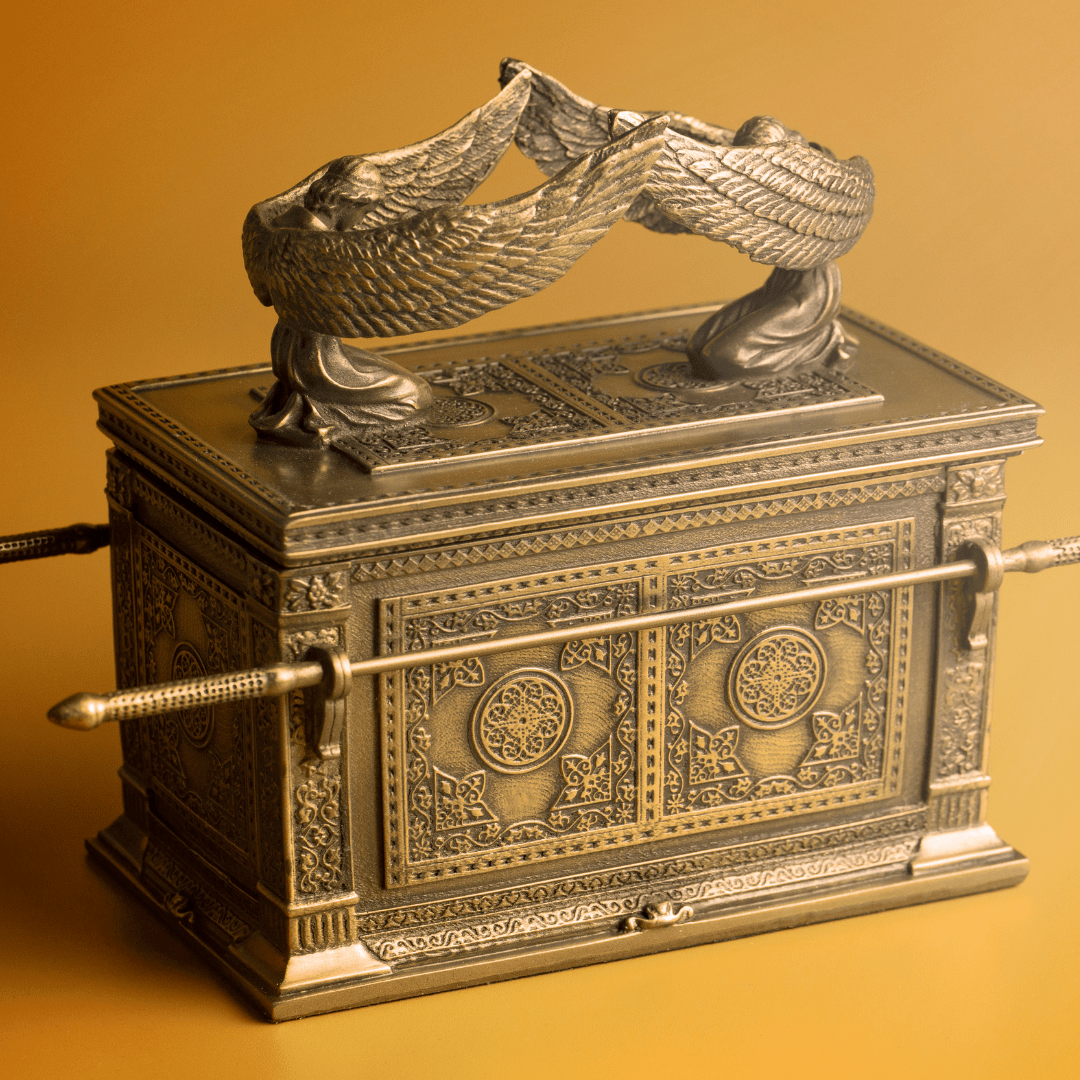
In the Old Testament, the Ark of the Covenant, which symbolizes God’s presence, was crafted from pure gold. Additionally, this sacred Ark represents heaven, as it is God’s dwelling place. The gold signifies that nothing—neither moths nor rust—can tarnish what is contained within the Ark. Similarly, our heavenly inheritance—eternal life—cannot be stolen; it remains secure in the presence of the Father.
The essence of this teaching revolves around the question: Where do you place your trust? Is it in the money that can acquire temporary valuables on earth, or in God, who offers you eternal riches that surpass the physical wealth of this world?
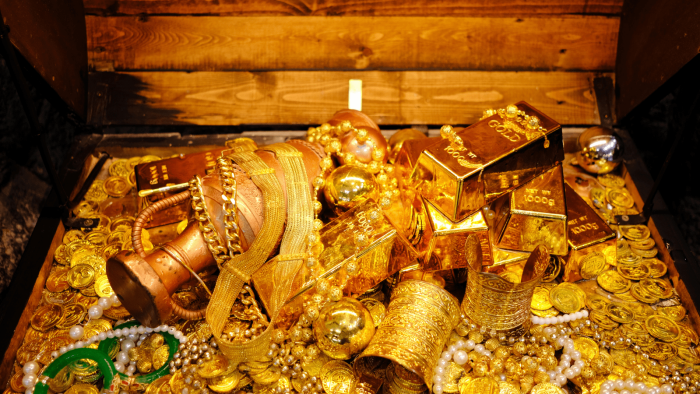
It’s intriguing that earthly treasures are often symbolized by a wooden chest, filled with gold and precious items, and typically secured with a lock. Similarly, the Ark of the Covenant is also a chest, made from acacia wood, overlaid with gold and cherubim vigilantly protecting the presence of God. Exodus 37:1-9 describes the design, dimensions and materials of this sacred chest hosting the presence of God.
4.1 The Ark Of the Covenant
The materials and design used for the Ark of the Covenant reflects the assurance we find in trusting God. Let’s uncover the symbolic meanings of the design:
The Cherubim
The cherubim reflects that our lives are safely guarded by God’s angels, beyond the grasp of the enemy. In Christ, our lives are untouchable, beyond the access of the enemy, and will not perish (John 3:16). This is the implication of “putting your treasures in heaven where thieves cannot break in and steal.”
John 10:10 NIV
“The thief’s purpose is to steal and kill and destroy. My purpose is to give them a rich and satisfying life.”
Acacia Wood
Acacia wood symbolizes protection against decay and destruction, particularly from moths. Moth’s eat clothes, the clothes represent our bodies. Putting our trust in God assures that our very bodies will be preserved both now and into the future. Paul writes that our current bodies are a temporal tent, when we place our trust in God, we shall eventually receive eternal bodies.
2 Corinthians 5:1 NLT
“For we know that when this earthly tent we live in is taken down (that is, when we die and leave this earthly body), we will have a house in heaven, an eternal body made for us by God himself and not by human hands.”
The Gold Overlay
The gold used to overlay The Ark of God represents life that is preserved eternally, while the Ark itself symbolizes heaven, a realm that is beyond the reach of thieves.
Moreover, gold is referred to as a “noble metal”, meaning it does not rust, corrode nor tarnish. It has no reaction to air or water, making it immune to their effects. Therefore, giving our lives to God preserves us from the damaging effects of external circumstances.
Psalm 91:9-10 NLT
“If you make the LORD your refuge, if you make the MOST high your shelter, no evil will conquer you; no plague will come near your home.”
The Ark of the Covenant ultimately symbolized that a safe, rich, satisfying and eternal life is only found in the presence of God. Jesus became the way to the Father, by bringing us the truth about the Good News of the Kingdom, which leads to life in the presence of God. This was the meaning of Jesus’ words in John 14:6, “I am the way and the truth and the life. No one comes to the Father except through me.”
5. Final Remarks
In conclusion, Jesus’ teaching challenges us to reflect on where we place our belief and trust. Will it be in the temporary wealth of this world or in God, who offers eternal riches? Let us choose to store our treasures in heaven, where they remain secure and everlasting.
Add a Comment